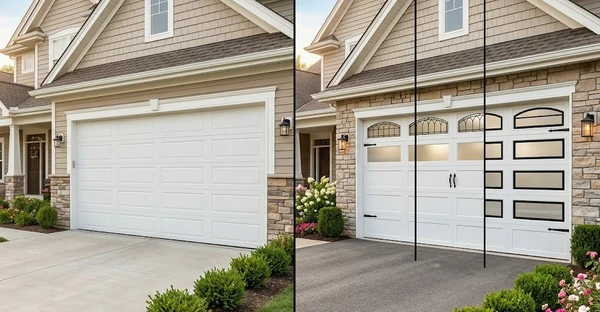
When my parents put a row of colonial-style window inserts on their garage door about four years ago, the neighbors thought they'd replaced the whole door. Same door, same paint, same hardware. Just the windows - snapped in on a Saturday afternoon, no power tools, no installer.
That reaction says something about what garage door window inserts actually do for the look of a house. A blank door panel is visually inert. It doesn't hold the eye, doesn't add texture, doesn't relate to anything else on the facade. Add a row of windows and suddenly the door has structure, proportion, character. It reads as part of a house that someone thought about, not just a flat panel blocking a hole.
The upgrade costs somewhere between $50 and $300 for most single or double-car doors. It takes an afternoon. And it can be reversed if you change your mind, which is more than you can say for most home improvement decisions.
What you're actually buying
There are two fundamentally different products that both get called "garage door window inserts," and they're not the same thing. Worth knowing before you order anything.
The first type is a snap-in or screw-in decorative insert that fits into an existing window opening cut into the door panel. If your door already has windows - rectangular cutouts with a frame - the inserts are the decorative pieces that create the divided-light appearance inside that frame. You're not adding a window; you're changing how the existing window looks. The glass or polycarbonate panel stays in place; the decorative frame overlay around it is what you're swapping. These are very easy to change and most people do it without any tools at all.
The second type is a full window kit that includes both the glass pane and the surrounding frame, installed into a door that doesn't currently have windows. This involves cutting an opening into the door panel - a jigsaw, careful measurement, and either following a template that comes with the kit or taking your own measurements. It's a more involved project, still DIY-accessible for most people, but a different scale of work than swapping decorative inserts in an existing opening.
One more thing that exists: faux window inserts, which are magnetic decorative panels that stick to the outside of the door and create the appearance of windows without any opening. They look reasonably convincing from the street and from the end of a driveway. Up close they look like exactly what they are. Useful for renters who can't modify the door, or for homeowners who want to try the look before committing to an actual installation. Not a long-term solution but not a bad short-term one either.
Style options - what's actually available and which homes they suit
The style of the insert matters more than most people expect because the wrong window pattern on the wrong door does the opposite of what you want. Instead of adding polish it creates visual confusion - a decorative element that doesn't relate to anything else on the house.
Colonial grilles - a rectangular grid of divided panes inside the frame - are the most versatile option and work on the widest range of home styles. Traditional, craftsman, transitional, colonial (obviously) - the clean symmetry of a four-pane or six-pane colonial window reads as intentional on almost anything. If you're not sure what style to get, start here.
Arched or cathedral inserts have a curved top to the window opening, creating a softer, more formal appearance. They suit homes with rounded architectural details - Spanish colonial, Mediterranean, traditional colonial with arched doorways or windows elsewhere on the house. On a very boxy contemporary house, an arch on the garage door looks slightly out of place. The house tells you whether the arch works.
Prairie style uses a border of small panes around a central clear panel - the Arts and Crafts aesthetic. Suits Craftsman bungalows, prairie-style homes, mid-century ranch styles done in an earthy palette. Less appropriate on formal colonial or contemporary homes.
Plain or simple rectangle - a clear pane in a clean frame with no divided grille at all. Goes on contemporary and modern homes where any decorative grid would undermine the clean aesthetic the door is trying to achieve. Works beautifully on flush-panel modern doors.
Frosted, tinted, or decorative glass - not a style per se, but a glass choice that affects privacy and light quality simultaneously. Frosted glass diffuses the light coming through rather than letting direct sunlight beam in. Tinted glass reduces glare. Both choices limit what can be seen from outside, which matters if you store anything valuable in the garage. Clear glass lets in more light but also more visibility. Worth thinking about before ordering.
Adding windows to a door that doesn't have them
If your door currently has no windows, this is a different conversation than simply replacing inserts.
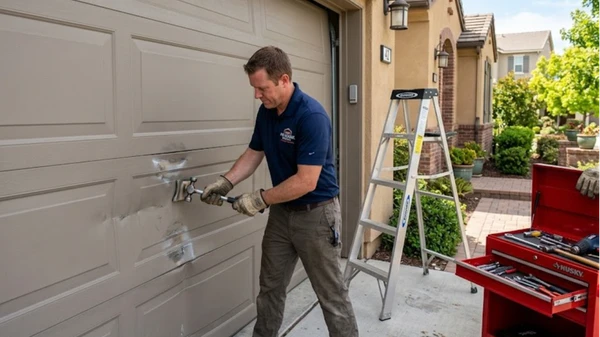
Adding windows to an existing door involves cutting openings into the door panels - typically the top section, both for aesthetic balance and privacy reasons. Most window kits include a paper or cardboard template that you tape to the panel and trace before cutting. The actual cut is made with a jigsaw, which most people with any DIY experience have used or can operate with minimal learning.
The things that go wrong in this process usually come down to two issues: measurement error and panel compatibility. On measurement: the windows need to be centered and evenly spaced, and this is harder to eyeball than it sounds on a sixteen-foot door. Measure twice, mark it clearly, check from across the garage before cutting. You can't uncut a hole in a door panel.
On compatibility: not all door panels accept aftermarket window kits cleanly. Insulated doors with thick foam cores are harder to cut cleanly and may require specific kits designed for insulated panels. Doors with internal steel stiffeners can create interference at unexpected locations. Before buying a kit, it's worth checking whether there's a compatibility recommendation from the door manufacturer, or asking someone familiar with your door type.
One practical thing about adding windows that several guides skip: the top section of the door is the only section you should cut windows into. Adding windows to lower sections creates obvious privacy and security problems - anyone walking past can look directly into your garage. The top section is typically above eye level from the exterior, allows natural light to enter and diffuse across the space, and maintains a traditional appearance that fits almost every garage door style.
How adding windows affects your door's balance
This is mentioned in a lot of guides as a brief caution and then immediately dropped, which doesn't do it justice.
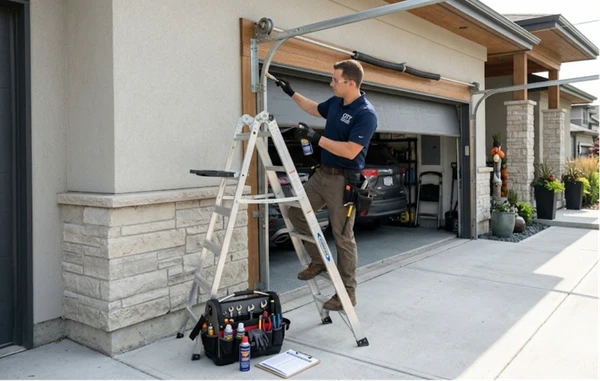
Your garage door spring system is calibrated to the weight of the door. Even a single pane of tempered glass adds meaningful weight - multiple windows add more. If the added weight pushes the door meaningfully above the spring's calibrated range, the door will feel heavy when manually operated, the opener will work harder on every cycle, and the springs will experience accelerated wear.
The threshold varies by door, spring type, and how much weight is being added. A single row of lightweight polycarbonate inserts on a door with decent springs is usually fine. A row of heavy tempered glass inserts on an already-heavy door on springs that are a few years old might need a spring adjustment.
It's not a reason to skip the upgrade. It's a reason to mention to your garage door technician what you're adding when you have the door serviced next, or to have someone take a look if you notice the door feeling heavier after installation. Catching a spring balance issue early is a $50 adjustment. Catching it after a spring failure is a several-hundred-dollar repair.
Costs at a glance
|
Option |
Typical Cost |
|
Decorative snap-in overlay inserts |
$15 – $40 per insert |
|
Full window kit with glass (add to existing door) |
$50 – $150 per window |
|
Magnetic faux window panels |
$30 – $80 per panel |
|
Professional installation of window kit |
$100 – $250 labor |
|
Full window row, professional installed |
$300 – $700 total |
Most single-car garage doors get four to six windows. Double-car doors get six to nine. DIY installation for snap-in inserts is genuinely a few hours with no special tools. Adding new windows to a blank panel is a half-day project for someone comfortable with a jigsaw and a tape measure.
The one question worth asking before you start
Does the window style you're choosing relate to the windows on the rest of your house?
This is the question most people skip, and it's the reason some window insert projects look cohesive and others just look added-on. The garage door is part of the house's exterior. When the garage windows have colonial grilles and every other window on the house is clean contemporary glass - or vice versa - the garage door reads as a different building.
Match the grid pattern, the shape, and the frame finish to what's already there. If your house has prairie-style windows with horizontal emphasis, a colonial grid on the garage door fights that. If your house has arched windows over the front door, arched garage door inserts pick that thread up and run with it.
The window insert itself costs $20. Making it look like it was always supposed to be there is a free decision made before you buy anything.