The garage door looks fine. It works. But it's just a big flat wall of steel staring back at the street, and you'd like it to look like something more than a storage unit facade.
Windows fix that. They break up the monotony, let natural light into a space that usually needs it, and - done right - actually improve curb appeal in a way that's hard to get otherwise without replacing the whole door.
So what does it actually cost? And is this something you can do yourself, or do you need to bring someone in?
The short version: it depends heavily on whether your door already has window openings cut into it, what glass you choose, and - here's the thing most articles skip - what the added weight does to your spring system.
Let's go through it properly.
The Two Very Different Scenarios
Before any price talk makes sense, you need to know which situation you're in.
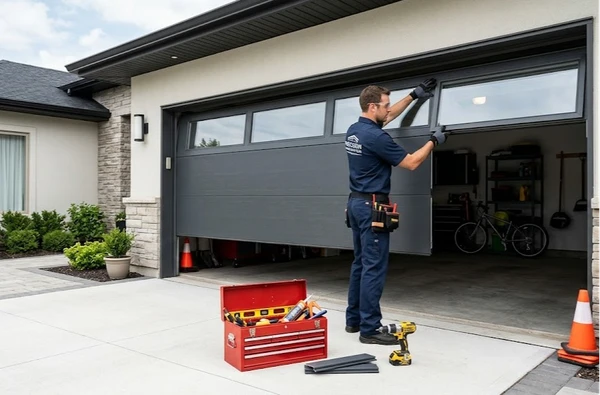
Scenario 1: Your door already has window openings. Some garage doors come with pre-cut panel sections where windows can be inserted - the opening is there, you just need the glass. This is the easy version. Inserts drop in, snap or screw into place, done.
Scenario 2: Your door has no openings at all. You're cutting into solid panels. That's a different job entirely - more labor, more risk, and a weight issue that can affect the whole door's balance.
Most of what you read online mixes these two together. They're not the same project.
Cost Breakdown: Windows on an Existing Door
If your door has no pre-cut openings, here's what you're looking at to add them:
|
What You're Paying For |
Cost Range |
|
Basic clear glass inserts (per window) |
$50 – $120 |
|
Frosted or tinted glass inserts |
$120 – $350 per panel |
|
Decorative / specialty inserts |
$200 – $1,200 each |
|
Professional labor (per window, retrofit) |
$75 – $200 |
|
Spring adjustment (if needed due to weight) |
$150 – $300 |
|
Structural truss reinforcement |
$100 – $300 |
For a typical sectional door getting four windows across the top panel - the most common configuration - expect to spend $500–$900 all in for basic clear glass with professional installation. Go frosted or decorative and that number climbs.
If your door came from the factory with window-ready openings, costs drop significantly. Just the inserts themselves - $50 to $200 each depending on style - and maybe an hour of installation labor if you're not doing it yourself.
The Weight Problem Nobody Mentions
Glass is heavy. This seems obvious, but the implications for garage doors specifically are something most people don't think about until they've already bought the inserts.
Residential garage doors are designed to be as light as possible. The spring system - whether torsion or extension - is calibrated to the door's exact weight, usually with only about a 5% tolerance. Add a row of glass windows across the top panel and you can push past that threshold.
What happens then? The door becomes harder to open manually. The opener strains. Over time, the springs wear faster. In some cases the door won't stay open at all - it creeps back down because the springs can no longer hold the weight in balance.
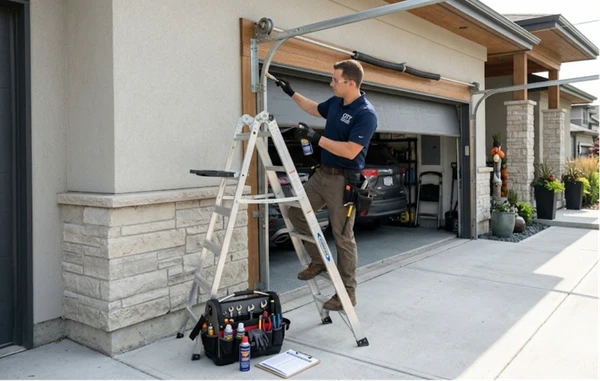
Before cutting any openings, find out your door's current weight and the weight of the windows you're planning to add. A garage door technician can check this quickly. If the spring system needs adjustment after adding windows, that's an extra $150–$300 - but skipping it and hoping for the best is how you end up with a $400 repair six months later.
Cutting Into Solid Panels: Can You DIY It?
Technically yes. Practically, it requires more precision than most people expect.
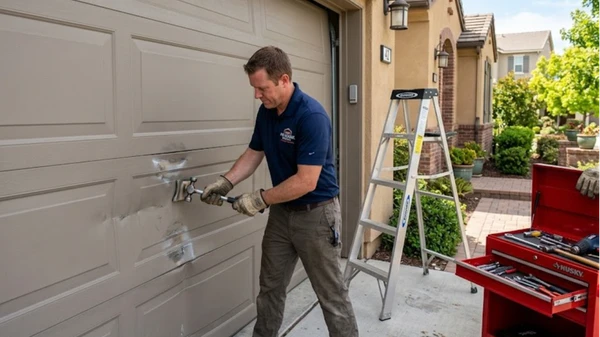
The process involves marking the opening on the panel, drilling corner holes, cutting with a jigsaw, fitting the window frame, and sealing with weatherproof caulk. If your measurements are off by even a quarter inch, the frame won't sit flush - and a gap in a garage door window seal is a moisture and draft problem waiting to happen.
There's also the structural piece. When you cut a large rectangular section out of a door panel, you remove some of the panel's rigidity. Many installers add a horizontal truss brace across the back of the cut panel to compensate. Skip this on a large door or a double-car door with multiple windows and you may see panel sag over time.
Honest take: if you've done jigsaw work before and you're comfortable with careful measurements, cutting one or two windows into a steel door is manageable. Four or more windows across a double-car door is a job worth handing to someone who does it regularly.
Glass Type: What Are You Actually Choosing Between?
Clear glass is the cheapest option and lets in the most light. It also lets people see straight into your garage. Fine if you're okay with that, less fine if you store anything valuable or just prefer not to have the interior on display.
Frosted glass blocks the view while still allowing light through. Same natural light effect, zero visibility into the space. Costs about $120–$350 per panel depending on size. This is what most people choose once they think through the privacy question - which they often don't do until after ordering clear glass.
Tinted glass works similarly to frosted but gives a slightly different aesthetic. Can also help reduce heat gain if your garage gets direct afternoon sun. Costs roughly the same as frosted.
Decorative / grille inserts - colonial, prairie, cathedral patterns - run significantly more, up to $1,200 for elaborate styles. These are mainly an aesthetic choice for carriage-house style doors where the window design is part of the overall look.
One thing worth knowing: if you order clear glass and later decide you want privacy, you can apply frosted or tinted window film yourself after installation. It's an adhesive film, costs about $15–$30 for a roll, and works well. Some people take this route to buy cheap clear inserts now and decide on privacy film later.
What About Magnetic Faux Windows?
If you just want the look of windows without cutting anything, magnetic faux window inserts exist. They're decorative panels that stick to metal garage doors with magnets - no cutting, no installation, no weight issue.
They run about $20–$80 for a set. They look surprisingly decent from the street. They don't let in any light, obviously.
Not mentioned much in most guides, but worth knowing if you rent, if your door panels aren't compatible with real inserts, or if you want to test how windows look on the door before committing to real ones.
When Adding Windows to an Existing Door Isn't the Right Move
A few situations where it's worth pausing before cutting:
Your door is older or has visible sag. Before cutting into any panel, stretch a string across the top of the door and check for sag along the joint between sections. If it's already bowing, cutting windows into it will make things worse. A warped panel also means the rectangular window insert won't sit flat.
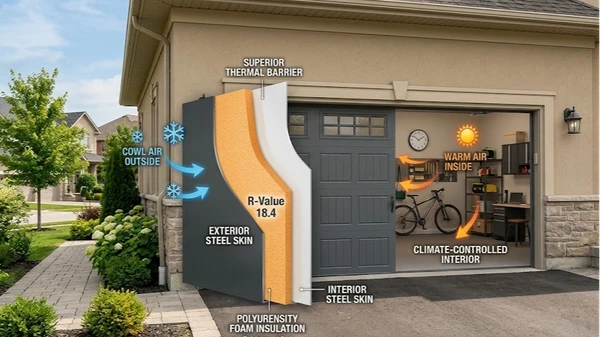
Your door is heavily insulated. A thick triple-layer insulated door loses some of that insulation value with every panel you cut into. If energy efficiency is why you chose that door in the first place, windows work against it.
You're planning to sell in the next year or two. Windows add curb appeal on most homes, but on an older or worn door they can look like a patch job. In that scenario, a full door replacement with factory-fitted windows gives you better ROI and a cleaner result.
Thinking about adding windows to your garage door and want to know what it would cost for your specific door? DoorFixy can assess your door, advise on the right glass for your privacy and light needs, and handle the installation correctly - including the spring check. Reach out anytime for a quote.